
Separation is rarely simple, even when both people agree to resolve matters through mediation. Many couples leave mediation feeling relieved that arrangements have finally been agreed, only to discover weeks or months later that one person is no longer sticking to the mediation agreement Powys.
This can be frustrating, stressful, and emotionally exhausting — especially if the agreement involved children, finances, property, or regular communication arrangements. If your ex has suddenly stopped following what was agreed during mediation, you may be wondering whether the agreement still means anything and what steps you can realistically take next. What Happens If We’re Not Married but Have Children Together?
The good news is that you do have options. The right approach often depends on the type of agreement that was made, whether it was turned into a legal court order, and how serious the breach has become.
Understanding What a Mediation Agreement Actually Means
Before taking action, it is important to understand what kind of mediation agreement Powys you have. Many people assume mediation agreements Powys are automatically legally binding, but that is not always the case in the UK.
During family mediation, agreements are usually written down in documents such as:
- A Memorandum of Understanding
- A Parenting Plan
- Open Financial Statements
- Informal written agreements between both parties
These documents are created to document what each person agreed upon during mediation meetings. Nonetheless, as mediation is voluntary, without taking further legal steps, the mediation agreement may not be legally enforceable.
For example:
- A parenting arrangement agreed in mediation may remain informal unless approved by the court.
- A financial settlement may only become legally binding once it is converted into a Consent Order and approved by a judge.
This distinction is extremely important because it affects what you can do if the agreement is broken.
Common Ways an Ex May Break a Mediation Agreement
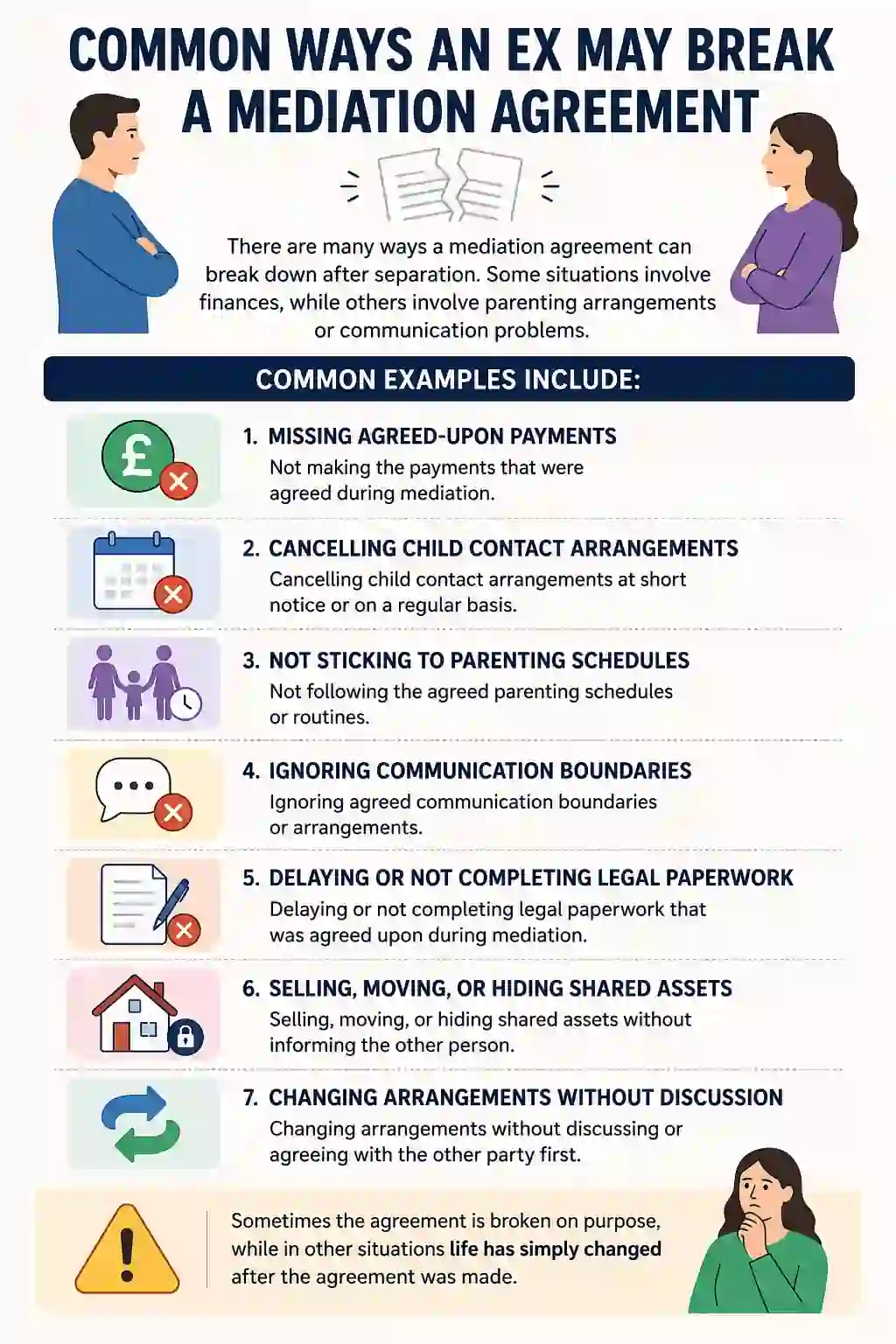
There are many ways a mediation agreement Powys can break down after separation. Some situations involve finances, while others involve parenting arrangements or communication problems.
Common examples include:
- Missing agreed-upon payments
- Cancelling child contact arrangements at short notice or on a regular basis
- Not sticking to the agreed parenting schedules.
- Ignoring agreed communication boundaries or arrangements
- Delaying or not completing legal paperwork that was agreed upon during mediation
- Selling, moving, or hiding shared assets without informing the other person
- Changing arrangements without discussing or agreeing with the other party first
Sometimes the mediation agreement is broken on purpose, while in other situations life has simply changed after the agreement was made.
Why Mediation Agreements Sometimes Fall Apart After Separation
Even a successful mediation can still bring the pain of separation both emotionally and financially. People’s emotions can quickly change over time when stress, new relationships or money pressures enter the picture.
In some cases, mediation agreements fail simply because they were a bit unclear or not fully practical from the start. When responsibilities and expectations aren’t explained in a clear, detailed way, it’s very easy for misunderstandings to build up later on.
Changes in work, housing, childcare, or income can also make it difficult for one person to continue following the original mediation agreement.
Is a Mediation Agreement Legally Enforceable in the UK?
Not every mediation agreement Powys is legally enforceable. If the agreement stayed informal after mediation, the court may not be able to enforce it directly. What Happens When Parents Can’t Agree on Child Arrangements?
However, financial agreements can become legally binding when they are converted into a Consent Order and approved by the Family Court. Parenting arrangements can also be formalised through a Child Arrangements Order if needed.
If your agreement was approved by the court and your ex fails to follow it, legal enforcement action may be possible.

What to Do First If Your Ex Breaks the Agreement
The first step is to remain calm and avoid reacting emotionally. It is important to review the agreement carefully and understand exactly what has been broken.
You should also:
- Keep a clear record of any missed payments or times when the agreed arrangements haven’t been followed.
- Save all emails, messages, or any written communication between you and your ex.
- Try, where possible, to talk about the issue in a calm and practical way rather than letting it turn into an argument.
- Focus on finding workable solutions instead of going back and forth in conflict.
If things still don’t improve, getting early legal advice can really help you understand where you stand and what options you may have before the situation escalates further.
Can You Return to Mediation to Resolve the Problem?
Yes, many separated couples do go back to mediation when disagreements come up later on. Even if things have become tense, mediation can still help as long as both people are willing to talk and try to find a workable solution calmly.
Returning to mediation may help:
- Update parenting arrangements
- Discuss financial changes
- Resolve misunderstandings
- Improve communication
Mediation is often a quicker, less stressful, and more affordable way to sort things out compared to going straight to court, especially when both people are still willing to talk and try to fix the situation together.
When It May Be Necessary to Take Legal Action
Legal action may become necessary if your ex repeatedly ignores the agreement or refuses to cooperate.
Depending on your case, the Court might need to get involved if:
- Court orders that have the force of law are being disregarded.
- Child arrangements are constantly disrupted.
- No financial payments are being made.
- Mediation attempts have failed completely.
Your solicitor should be able to advise whether enforcement work or another court application needs to be made in relation to your situation.

How Courts View Broken Mediation Agreements
Courts generally encourage mediation because it helps separated couples sort out their issues without immediately going through the stress and cost the court system. If an agreement was reached during mediation, judges may still consider it useful evidence of what both parties previously agreed in principle, even if it is not always legally binding on its own. How to Avoid Family Court During Divorce in the Powys UK
Where agreements were formalised through the court, judges are more likely to take breaches seriously. In child-related cases, the court will always focus on the child’s best interests before making decisions.
How to Protect Yourself in Future Mediation Agreements
Clear and realistic agreements are usually easier to follow in the long run. It really helps to make sure everything is written down properly, with no confusion about who is doing what, when, and how. Agreements that are practical and specific tend to hold up much better after separation, especially when emotions or circumstances change.
You can reduce future problems by:
- Making agreements as clear as possible
- Keeping written communication
- Formalising important agreements legally
- Reviewing arrangements when circumstances change
- Seeking legal advice before finalising major decisions
Taking these steps can help create stronger and more stable agreements after separation.
Common Questions Clients Ask
Q: What steps should I take if my ex-partner suddenly stops following the mediation agreement Powys we both agreed to after separation?
The first thing to do, if your ex does not abide by the agreement, is to try to remain calm, where possible, and to ascertain exactly what you agreed to during mediation. Write simple records of those things that aren’t on track, including missed payments or cancelled plans with the person, any problem related to communication, and, if it feels possible, talk about it in very simple words before speaking to a lawyer or taking strong measures.
Q: Are family mediation agreements in the UK Powys automatically legally binding, or do they need to be approved by the court first?
Most mediation agreements Powys are not automatically legally binding unless they are formally approved by the court. Financial agreements can usually be made legally enforceable through a Consent Order, while child arrangements may be formalised through a Child Arrangements Order if needed.
Q: Can we go back to mediation if our original agreement is no longer working or circumstances have changed since the separation?
Yes, many separated couples return to mediation when arrangements stop working properly. Mediation can help both people discuss changes in finances, parenting schedules, communication issues, or other concerns in a calmer and more structured environment.
Q: Will mediation work if the other party refuses to attend mediation again and fails to adhere to the agreement we originally reached?
If they are unwilling to mediate further and continue to contravene the agreement, you will have to consider whether you should get legal advice on your options. This might involve applying to the court for a new order, or asking the court to enforce a valid existing agreement in accordance with your obligations.
Q: What if one party continues to break promises around finances or child arrangements–can the court enforce the mediation agreement Powys?
If the agreement was formally converted into a legally binding court order, the Court will have the power to enforce it. While the contract may not have been formal, it could provide evidence to the court that shows what was agreed upon by both parties before.
Q: How seriously do UK family courts deal with repeated breaches of parenting or child contact agreements after mediation?
Family courts take repeated breaches seriously, particularly when they negatively affect a child’s stability, routine, or well-being. The court will always focus on the best interests of the child and may decide to formalise or adjust arrangements if ongoing problems continue.
For Further Information, please Call Us ON 03300100360